
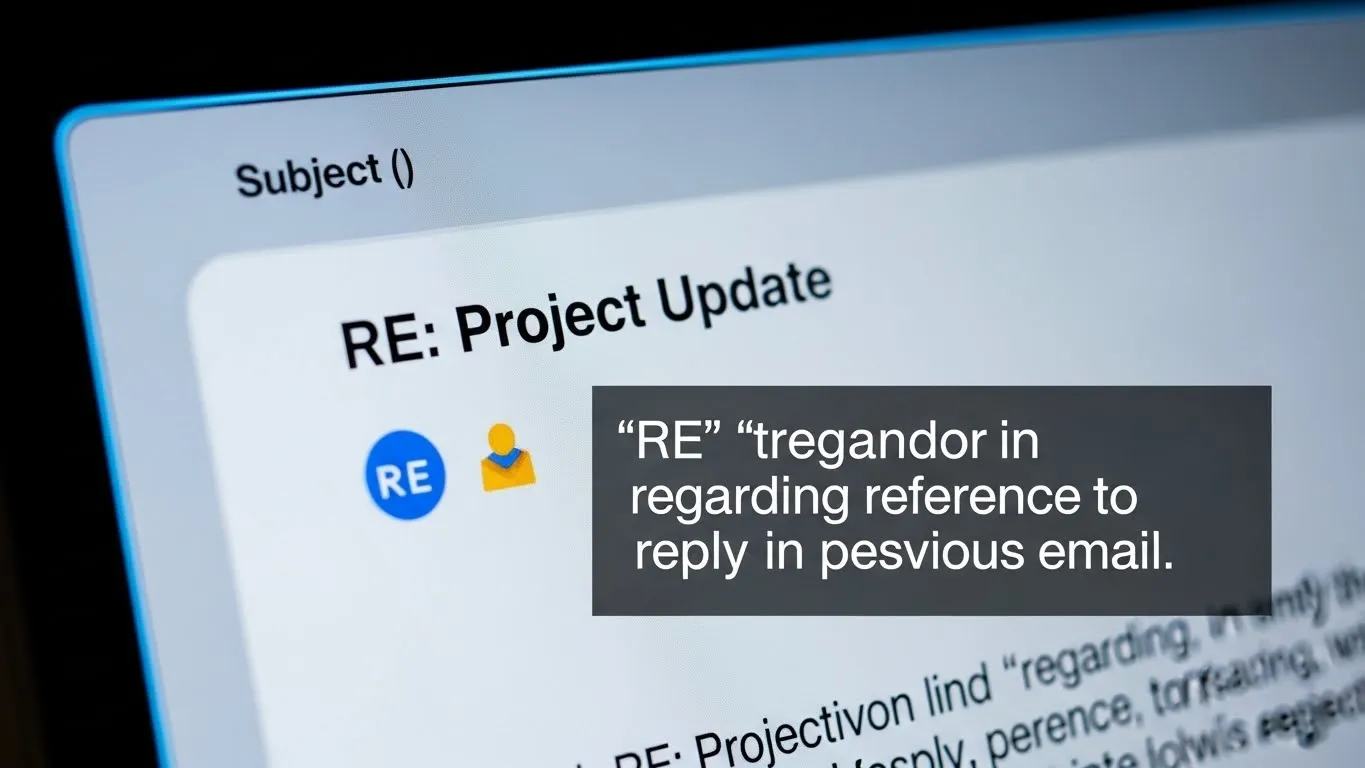
I was scrolling through my inbox the other day when I noticed something curious. Every time I opened an email, I kept seeing “RE” at the beginning of the subject line. At first, I had no idea what it meant, and honestly, it confused me a bit. I thought, “Is this some kind of code or a technical thing I’m missing?”
After a little digging, I realized that “RE” isn’t random at all. It actually stands for “Regarding” or “In reply to”, which basically tells you that the email is part of an ongoing conversation. Once I understood that, it made handling my emails so much easier. Instead of getting lost in a chain of messages, I could quickly identify which emails were replies and which were new.
I remember one time when I almost missed an important email because I didn’t pay attention to the “RE” at first. After that, I made it a habit to check the subject line carefully. Trust me, once you know what it means, it’s a tiny detail that can save you from a lot of email confusion.
Quick Answer: RE means “Regarding” or “In Reply To.” It’s a formal and polite way of showing that the email is a response to a previous message or about a specific topic.
What Does RE Mean in Text? 🧠
In emails, RE is short for “Regarding”, which basically signals that the email is a reply or pertains to a particular subject. Unlike slang used in texting or social media, RE is formal and commonly seen in professional correspondence.
Example:
- Original email: “Can we schedule a team meeting tomorrow?”
- Reply email subject: “RE: Can we schedule a team meeting tomorrow?”
In short: RE = Regarding = Replying to or about a previous email ✅
Where Is RE Commonly Used? 📱
RE is mostly used in professional or formal communication channels, but you might also notice it in casual contexts if someone forwards an email chain. Here’s where you’ll see it:
- ✉️ Email Business, school, or formal correspondence
- 📧 Work platforms Outlook, Gmail, corporate email clients
- 👔 Professional chats Sometimes in Slack or Teams when referencing email topics
- ⚠️ Note: Not commonly used in casual texting or social media it’s formal-friendly
Tone: Formal, polite, and professional
Examples of RE in Conversation 💬
Here are some realistic examples of RE in action:
- A: Can you send me the latest report?
B: RE: Latest report Sending it now 📄 - A: Are we meeting at 3 PM today?
B: RE: Meeting at 3 PM Sounds good 👍 - A: Did you finish the client presentation?
B: RE: Client presentation Almost done, will share soon - A: I need feedback on the proposal.
B: RE: Proposal feedback I’ll review by EOD - A: Can we discuss the budget tomorrow?
B: RE: Budget discussion Tomorrow works fine
When to Use and When Not to Use RE 🕓
✅ When to Use RE:
- Responding to a previous email
- Maintaining professional tone
- Clarifying the subject of your reply
❌ When Not to Use RE:
- Casual texting with friends
- Urgent or time-sensitive messages in chat
- Social media posts or informal messages
Comparison Table:
| Context | Example Phrase | Why It Works |
| Friend Chat | “No rush, got your msg 😄” | Casual & friendly |
| Work Chat | “Take your time on the report” | Polite & professional |
| “RE: Monthly budget review” | Formal, clear, professional |
Similar Slang Words or Alternatives 🔄
| Slang | Meaning | When to Use |
| FW | Forward | When sending someone else’s email |
| Repl | Reply | Informal chats or quick replies |
| URG | Urgent | Marking priority emails |
| FYA | For Your Action | Professional follow-ups |
| FYI | For Your Information | Sharing info without expecting reply |
FAQs
Q1: Is RE only used in emails?
A: Mostly yes. RE is formal and used primarily in emails and professional correspondence. You won’t usually see it in casual texting.
Q2: Can I use RE in texting?
A: It’s uncommon and may look out of place. Stick to casual replies like “Re:” or “About” in chats if needed.
Q3: What’s the difference between RE and FW?
A: RE means “Replying to” or “Regarding,” while FW means “Forwarding” someone else’s email.
Q4: Should I type RE in lowercase?
A: It’s standard to type RE in uppercase in email subjects. Lowercase may look informal or incorrect in professional contexts.
Conclusion
Now that you know what RE means in email, you’ll never be confused when you see it again! It’s a simple, formal shorthand for “Regarding” or “In Reply To,” letting recipients know the topic or context of your email. Remember: use it in professional settings, in email replies, and whenever you want to stay clear and polite. Next time you hit “Reply,” you’ll see RE in action and you’ll know exactly what it means!
Discover More Post
- What Does L Mean in Text Messages? Explained For 2026
- What Does Derpy Mean? A Complete Guide For 2026
- What Does Chicago Really Mean? Full Origin & History Explained For 2026

I started Riddlistic.com to share riddles that are fun, tricky, and make you think. 🧠✨My goal is to entertain and challenge you with every riddle you solve! 🎉